The Hindu festival of Narali Purnima or the Coconut festival is celebrated with great fervor and in a jubilant manner by the fishermen and the fishing community in Maharashtra on the full moon day of Shravan. 'Shravan' is one out of the four most auspicious months in the Hindu calendar. Thus, a full moon day or the Purnima in this month is regarded as even more sacred. Narali Purnima is celebrated by Hindus in Daman and Diu on the west coast of India and in the coastal region of Maharashtra like Thane, Ratnagiri, Konkan, etc.The word 'Naral' means coconut and coconut is offered to the sea on the full moon day, hence the name Narali Purnima. Other names for the festival include Shravani Purnima, Raksha Bandhan and Rakhi Purnima.
Significance
It marks the end of the monsoon season in Maharashtra. It falls on the full moon day of the Hindu calendar month of Shravan. During this festival, people offer coconuts to the sea. The festival marks the beginning of the fishing and the water-trade amongst the fisher folk. Thus, the fishermen offer prayers and worship the sea-God, Varuna, for a smooth journey out in the waters. Dancing and singing are an integral part of this festival. The traditional food includes sweet coconut rice which is savored with curry.
The reason for the celebration of the festival is very specific to the fisher folk. The period before the full moon day or the Purnima of Shravan is regarded as the mating season for the fish. Thus during this period, the fishermen withhold their fishing activity so as not to disrupt the process of reproduction by killing the fish.
Thus, during this period no fishing takes place and no fish is consumed by the people in the community. This abstinence from eating fish comes to an end on the day of the Narali Purnima when a coconut is thrown into the sea at high tide of the day. The reason for this is during high tide, the sea is in heavy motion and very intense. This, the offering of the coconut is a gesture to calm its fury.
The reason for offering no other fruit but the coconut is because coconut has long been regarded as an auspicious offering Gods in all Hindu festivals. This is because every part of the tree – leaves, bark, coconut itself is extremely useful to man. Thus, this offering of coconut is believed to appease the Sea god for a safe journey ahead in the waters.
RAKSHA BANDHAN:
The most famous Indian festival, Raksha Bandhan is celebrated in the month of Sravan. The day symbolizes love, affection and a feeling of brothers and sisters, The significance of Rakhi is the bond of protection or promise of protection. Sisters apply tilak to the forehead of their brothers, tie the Rakhi to the wrist and do arati and pray for their good health & long life.
Makar Sankrati : Makar Sankranti is one of the most auspicious occasions for the Hindus, and is celebrated in almost all parts of the country in myriad cultural forms, with great devotion, fervour and gaiety. It is a harvest festival. Makar Sankranti is perhaps the only Indian festival whose date always falls on the same day every year on the 14th of January (with just a few exceptions when it is celebrated either on 13th or 15th of January).
Makar Sankranti is the day when the glorious Sun-God begins its ascendancy and entry into the Northern Hemisphere and thus it signifies an event wherein the Sun-God seems to remind their children that 'Tamaso Ma Jyotir Gamaya'- may you go higher & higher, to more & more Light and never to Darkness.
To Hindus, the Sun stands for knowledge, spiritual light and wisdom. Makar Sankranti signifies that we should turn away from the darkness of delusion in which we live, and begin to enjoy a new life with bright light within us to shine brighter and brighter. We should gradually begin to grow in purity, wisdom, and knowledge, even as the Sun does from the Day of Makar Sankranti.
RAM NAVAMI :
The birthday of Lord Rama, the celebrated hero of the famous epic, 'Ramayana', is enthusiastically celebrated on the ninth day of the waxing moon in the month of Chaitra, all over India. Lord Vishnu is worshiped in his human incarnation as Rama, the divine ruler of Ayodhya. Sri-Ramnavami is dedicated to the memory of Lord Rama. It occurs on the ninth day (navami) of Navratri. The festival commemorates the birth of Rama who is remembered for his righteous reign. Ramrajya (the reign of Rama) has become synonymous with a period of peace and prosperity. Mahatma Gandhi also used this term to describe how according to him, India should be after independence.
Ramnavami occurs in the month of March. In northern India especially, an event that draws popular participation is the Ramnavami procession. The main attraction in this procession is a gaily-decorated chariot in which four persons are dressed up as Rama, his brother Laxman, his queen Sita and his disciple Hanuman. Several other persons dressed up in ancient costumes as work by Rama's solders accompany the chariot. The procession is a gusty affair with the participants shouting praises echoing the happy days of Rama's reign. People gather in thousands on the banks of the sacred river Sarayu for a dip. Some observe a strict fast on this day. Ayodhya is the focus of great celebrations. Devotees throng the temples of Ayodhya and Pondicherry. These are the places that are closely connected to the events of the Ramayana. The Significance of Ram Navami Significantly, the ancient Egyptians termed the sun as Amon Ra or simply as "Ra". In Latin, the syllable Ra is used to connote light. For example, we have Radiance which emission of light, or Radium, which means any substance emitting light or brilliance. The common element is the syllable Ra that in many languages is used to derive words for describing Sun or light. The occurrence of this syllable in most names used for Rama along with other clues is strongly suggestive that the festival Ramnavami antedates the R- ayana and it must have originated much before the Ramayana, as a 'Sun-festival' for invoking the Sun who was recognized as the source of light and heat even in ancient times. The importance of the Sun was much more in the higher latitudes from where the Aryans are supposed to have migrated into India. Many royal dynasties portrayed symbols of virility like the Sun, Eagle, Lion etc. as their progenitor. Rama's dynasty considered them to have descended from the Sun. This could have led to the tagging on, of Rama's birthday to a festival devoted to the sun. The Importance of Sun Worship on Ram Navami The Sun was recognised as the source of light and heat even in ancient times. The importance of the Sun was much more in the higher latitudes from where the Aryans are supposed to have migrated into India. Many royal dynasties portrayed symbols of virility like the Sun, Eagle, and Lion etc. as their progenitor. Rama's dynasty considered them to have descended from the Sun. This could have led to the tagging on, of Rama's birthday to a festival devoted to the sun. There is some link between Lord Rama and Sun Worship. The Sun is considered to be the progenitor of Rama's dynasty, which is called the Sun dynasty (Raghukula or Raghuvamsa, Raghu means Sun and Kula or Vansa mean familial descendant). Rama is also known as Raghunatha, Raghupati, and Raghavendra etc. That all these names begin with the prefix Raghu is also suggestive of some link with Sun worship. The hour chosen for the observance of the lord's birth is that when the sun is overhead and is at its maximum brilliance.
GANESH CHATURTHI
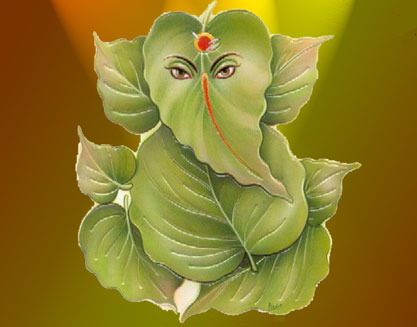
Ganesh Chaturthi is celebrated on the 4th day of the bright half of Bhadrapad. This festival marks the birthday of Lord Ganesh. Lord Ganesha or Ganpati is one of the most popular deities in the Hindu religion worshiped by both Shaivites and Vaishnavites. Even Buddhists and Jains have faith for Ganpati. He is considered to be an avatar of both Shiva and Vishnu.
On the occasion of the Ganpati festival, a large number of idols are made of clay or metal in all possible sizes; sometimes even up to twenty feet. People buy idols of Lord Ganesha and install them in their houses and worship the idol for one to ten days, after which the idols are taken out ceremoniously, through the streets of the town (especially in Maharashtra) and immersed into the river, sea or well.
A cultural feast is held to coincide with Ganesh Chaturthi in Maharashtra especially at Pune. Classical dance, music performances, poetry recitations, folk dances, theater and film festival are the main features of this festival.
Janmashtami
This is one of the famous songs that people sing on the occasion of Janmashtami, the birth anniversary of Lord Krishna the eighth avatar (Incarnation) of Lord Vishnu. This religious festival is celebrated all over India in the month of August/September on the ashtami of Krishna Paksh or the eighth day in the month of Bhadon according to the Hindu calendar with great devotion and zeal. Janmashtami is also known as Gokulashtami, Krishnasthami, Srijayanti.
The Janmashtami of Mathura and Vrindavan, the places where Lord Krishna had spent his childhood, are famous all over the world. Devotees from across the world come to these pious places to celebrate Janmasthami. On this auspicious occasion, temples and homes are beautifully decorated and illuminated. Night long prayers are offered and religious hymns are sung in temples. The priests chant holy mantras and bath the idol with Panchamrit which comprises of Gangajal (water from the holy Ganges River), milk, ghee (clarified butter), curd, and honey pouring all these from a conch shell. After this bath the idol of the infant Krishna (also known as Balmukund) is placed in a cradle. Devotional songs and dances mark the celebration of this festive occasion all over Northern India.
Maha Navratri
The Nine Days of Navratri 2015Navratri, the festival of nine nights is dedicated to Goddess Durga and her nine forms. According to the Hindu calendar, Navratri begins from the first day of the bright fortnight of Ashwin which usually coincides with the end of the rainy season.
The nine days have great religious significance as Goddess Durga, the divine mother, had destroyed the evil force (in the form of the demon Mahishasura) during this period.
The festival is celebrated with true devotion and purity all over the country. People from various sections of the society irrespective of caste and creed celebrate this festival by visiting temples and offering pujas at the Mother’s feet.
In some places special puja samarohas are also held by setting the images of Mother Durga on beautifully decorated pandals. Temples dedicated to Shakti also make arrangement for pujas and vrats to mark these nine days as true symbols of devotion and adoration towards the divine mother.
Day 1: Navratri 2015 starts on October 13 (Tuesday). The first day is called Pratipada. Day 2: The Dwitiya or the second day of Navratri 2015 is on October 14 (Wednesday). Day 3: The Tritiya or the third day of Navratri 2015 is on October 15 (Thursday) Day 4: The fourth day of Navratri 2015, also known as Chaturthi is on the October 16 (Friday). Day 5: The fifth day of Navratri 2015, known as Panchami is on October 17 (Saturday) Day 6: Shashti, the sixth day of Navratri 2015 falls on October 18 (Sunday) Day 7: The seventh day of Navratri 2015, also known as Saptami, falls on October 19 (Monday) Day 8: Ashtami or the eighth day of Navratri 2015 falls on October 20 (Tuesday) Day 9: Navami or the ninth day of Navratri 2015, on October 21 (Wednesday) marks the end of Navratri.
Dussehra
In the months of Ashwin and Kartik, Hindus observe a 10 day ceremony of fast, rituals and celebrations to honor the triumph of Lord Rama over Demon Ravana. Dussehra also symbolizes the triumph of warrior Goddess Durga over the buffalo demon, Mahishasura. Thus, it is a celebration of victory of good over evil.
This celebration starts from Navratri and ends with the tenth day festival of “Dussehra”. Navratri and Dussehra is celebrated throughout the country at the same time, with varying rituals, but with great enthusiasm and energy as it marks the end of scorching summer and the start of winter season.
The tenth day after Navratri is called Dussehra, on which number of fairs are organized throughout northern India, burning effigies of Ravana. It is also called “Vijaya Dashami” or "Vijayadasami" as this day marks the victory of Lord Rama over Ravana. Vijaya Dashami is considered to be an auspicious day for the Indian householder, on which he worships, protects and preserves 'Shakti' (power). According to Scriptures, by worshiping the 'Shakti' on these nine-days the householders attain the threefold power i.e. physical, mental and spiritual, which helps him to progress in life without any difficulty.
The 'Ramlila' - an enactment of the life of Lord Rama, is held during the nine days preceding Dussehra. On the tenth day (Dussehra or Vijay Dasami), larger effigies of Ravana, his son and brother - Meghnadh and Kumbhakarna are set to fire.
The theatrical enactment of this dramatic encounter is held throughout the country in which every section of people participates enthusiastically.
In burning the effigies the people are asked to burn the evil within them, and thus follow the path of truth and goodness, bearing in mind the instance of Ravana, who despite all his might and majesty was destroyed for his evil ways.
Diwali
Diwali, also known as Deepavali or Deepawali is one of the most important, hugely waited and immensely cherished festival celebrated across India and in parts of Nepal. Originally, the name was Deepawali, which has its origin from Sanskrit, meaning "Rows of Deep".
Over the years the name has been pronounced as Diwali, especially in Hindi, whereas it still remains Deepawali in Nepali. Diwali also popularly known as “Festival of Lights” is celebrated with great gusto and is observed as an official holiday across India.
The festival of Diwali is not only significant to Hindus, but, has importance in Jainism, Buddhism, and Sikhism. For Hindus, it is associated with the return of Lord Rama to Ayodhya, after his 14 years of exile and victory over the demon Ravana.
On that day, he was welcomed to the kingdom of Ayodhya with rows of Deep, lightened throughout the kingdom. Thus, there is a tradition of lighting oil lamps that symbolize the victory of good over evil and freedom from spiritual darkness.



 vine mother, had destroyed the evil force (in the form of the demon Mahishasura) during this period.


